8 & Under
Play, movement, event discovery, coordination, and track & field fundamentals.
San Francisco Youth Track & Field
A youth track & field skill-development program and competitive team. Learn the sport. Develop the athlete. Compete when ready.
Programs
Golden Gate Force organizes athletes first by USATF age group, then by developmental readiness and competitive goals.
Play, movement, event discovery, coordination, and track & field fundamentals.
Foundational event skills, speed, jumping, throwing, hurdling, and confidence.
Progressive technical development, increasing event understanding, and competition skills.
More advanced event training, individual development, and competitive preparation.
Initial launch: 14 and under. The broader USATF progression includes 15–16 and 17–18; those older programs are not part of the initial launch.
Two pathways. One development philosophy.
Learn the sport without pressure to compete.
A safe, fun, lower-pressure setting to explore events, build movement and technical skills, gain confidence, and develop at an age-appropriate pace.
Intra-squad meets, evaluation days, and selected external meets may provide opportunities to demonstrate progress when appropriate.
Train to execute skills and perform in meets.
For athletes ready for consistent event-specific training, competition preparation, meet execution, improving marks, and more individualized technical development.
USATF Junior Olympic competition may serve as a postseason pathway for qualifying competitive athletes.
Values
Youth sport is an opportunity to develop more than speed, strength, and technical skill. Golden Gate Force uses track & field to help young athletes build confidence, curiosity, resilience, discipline, character, and a healthy relationship with competition.
Athletes, coaches, and families share responsibility for creating an environment where young people can learn, take risks, make mistakes, compete, support teammates, and grow.
Athletes
Bring effort, curiosity, respect, and a willingness to learn.
Coaches
Provide age-appropriate coaching, clear expectations, individual feedback, and a safe environment for development.
Families
Help create consistency, reinforce team values, and allow athletes to take ownership of their experience.
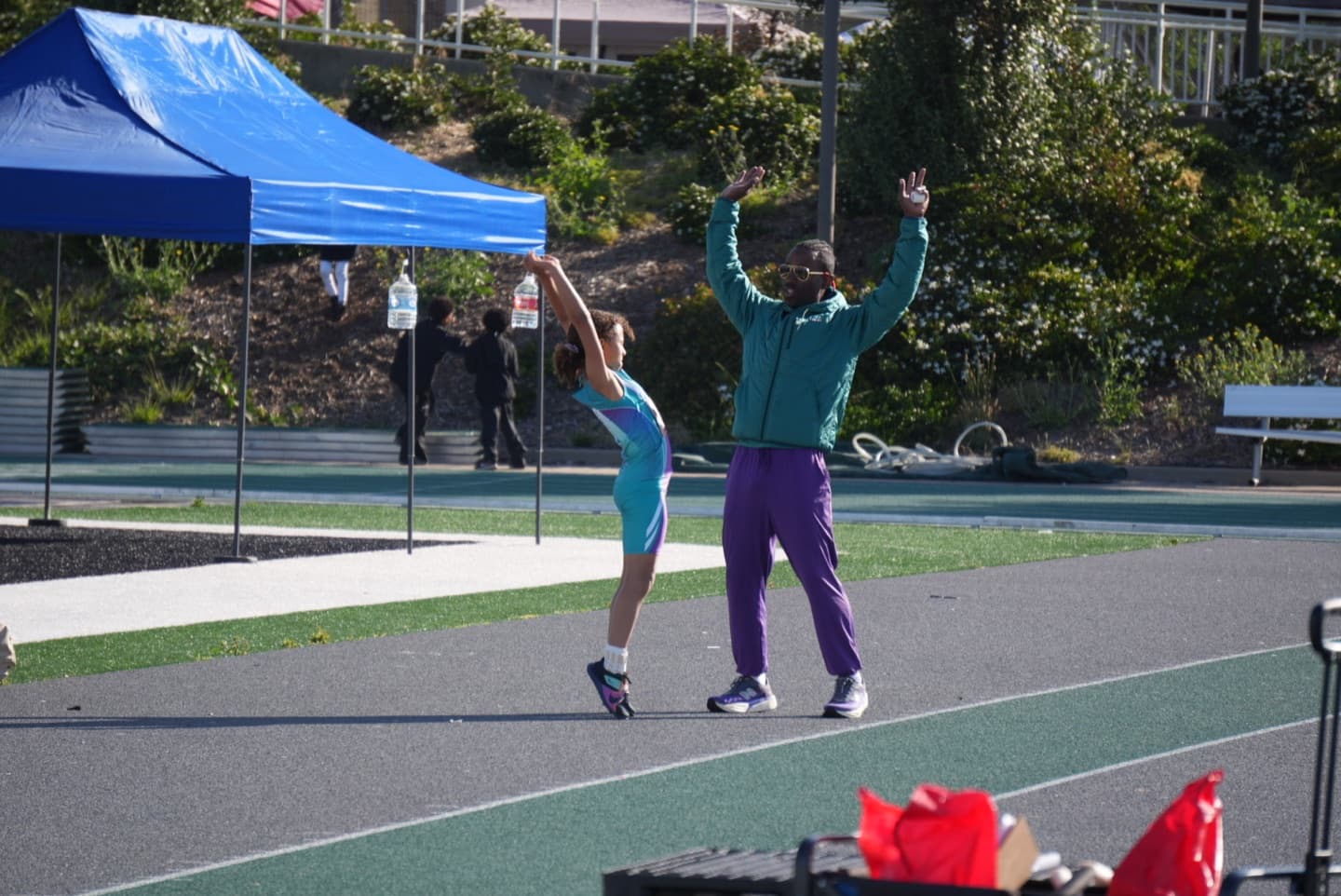
Founder & Head Coach
Jason Jackson founded Golden Gate Force to provide young athletes in San Francisco with structured, technically sound track and field development. A former University of Arizona football student-athlete, Jason has been involved in youth track and field for more than three years, including two years as a USATF-certified coach.
In 2026, athletes under his coaching earned national podium finishes and All-American honors in the long jump, high jump, triathlon, javelin, and shot put at the USATF Junior Olympics and AAU West Coast Nationals. His coaching emphasizes age-appropriate instruction, event fundamentals, confidence, and long-term athlete development.
Additional USATF education includes sports science, sprinting, long jump, and multidimensional skill development in youth athletes.
Training Philosophy
Track & field skills are the curriculum.
Running, jumping, throwing, hurdling, and event technique guide training. Athletic qualities are developed in support of learning and performing those skills.
Age, maturity, experience, and readiness shape coaching, training density, technical expectations, and feedback.
Young or new athletes and experienced competitive athletes train differently so each athlete—and each coach—can focus on the right developmental needs.
How We Train
Golden Gate Force does not use one training schedule or workload for every athlete. Practice frequency, session length, technical emphasis, competition exposure, and recovery are matched to the athlete’s age, experience, readiness, goals, and point in the season.
Competitive athletes train as a team, but they are not trained as identical athletes.
Developmental Program
Developmental athletes follow structured programming appropriate to their age group and developmental stage. Training emphasizes movement quality, coordination, running, jumping, throwing, hurdling, event exploration, technical fundamentals, confidence, and enjoyment of the sport.
The goal is skill acquisition and athlete development—not general conditioning—without requiring the training volume or competitive demands of the Competitive Team.
Competition is available as part of development, but it is not required.
Competitive Team
Competitive athletes train within event groups and the team environment, while their training plan is built around the individual athlete.
An athlete who joins in January may not follow the same progression as an athlete who joins in March—even when they train together and compete in the same event.
Competitive Planning
Competitive athletes are developed through event-specific seasonal plans that progress from broader preparation toward increasingly specific competition demands.
The weekly microcycle sets training emphasis, session sequence, workload, technical priorities, competition, and recovery. It is shaped for the athlete rather than assigned identically across the team.
Training Evolves Through the Season
Progression depends on when an athlete joins, their event, readiness, and target competitions—not one shared calendar date.
Build movement quality, speed and power foundations, general capacity, technical skills, and event understanding.
Increase event specificity, technical execution, competition rehearsal, and readiness while managing workload and recovery.
Protect quality, refine execution, compete, recover, and prepare athletes to perform when it matters.
Session Types
Session types are used when they serve the athlete’s current needs. They are not assigned to permanent weekdays.
Acceleration, sprint mechanics, jumping, throwing, strength, elastic qualities, and force production.
Event-specific skill acquisition, approach development, rhythm, hurdles, jumps, throws, and race execution.
Event rehearsal, approach consistency, meet routines, execution, confidence, and competition readiness.
Low-impact movement and recovery activities selected when appropriate within the athlete’s plan.
Opportunities to execute learned skills, establish performance marks, evaluate progress, and inform future training.
Structured, age-appropriate programming within their developmental pathway.
Event-specific and individualized seasonal planning within the team environment.
Competition
Development-first does not mean competition-free. It means competition serves development.
Meets, intra-squad competition, and evaluation days help athletes execute skills, establish marks, measure progress, and identify what training should address next.
Event availability varies by age group and meet. Practices, intra-squad meets, and evaluation days can create additional opportunities for skill development and progress measurement.
Facility Partnership
Golden Gate Force is currently working to establish a consistent training home through a facility partnership with a San Francisco school. We are seeking appropriate access to track and field facilities, restrooms when available, and practical arrangements for athlete arrival and pickup.
Our goal is to create a stable environment where young athletes can develop while respecting the school’s academic calendar, athletic programs, campus operations, and community responsibilities. Golden Gate Force is committed to clear communication with site leadership, adherence to established site rules, responsible use of all approved areas, and leaving the facility ready for the school and its students after every practice.
FAQ
The initial launch serves the USATF 8 & Under, 9–10, 11–12, and 13–14 age groups. The broader USATF progression also includes 15–16 and 17–18, but those programs are not part of the initial launch.
No. The program teaches foundational movement and event skills while giving experienced athletes a clear path toward more advanced training.
San Francisco facility details are coming soon. Exact practice times will be published before registration opens.
Membership fees will be published before registration opens.
Competition is optional for developmental athletes. Intra-squad meets, evaluation opportunities, and selected competitions give athletes ways to demonstrate progress when they are ready. Competitive Team athletes train specifically for meet participation and competition, with schedules and goals based on their individual development and season plan.
The program includes sprints, hurdles, distance, long jump, triple jump, high jump, shot put, and javelin. Event availability varies by age group and meet.
Join Golden Gate Force
Share a few details and we’ll keep you informed as the facility, season, and enrollment plans are finalized.
Registration opening date coming soon.